

Working Capital Formula How to Calculate Working Capital

what is change in working capital

Upgrading to a paid membership gives you access to our extensive collection of plug-and-play Templates designed to power your performance—as well as CFI’s full course catalog and accredited Certification Programs. Finally, the Change in Working as calculated manually on the Balance Sheet will rarely, if ever, match the figure reported by the company on its Cash Flow Statement. The Change in WC has a mixed/neutral effect on Best Buy, reducing its Cash Flow in some years and increasing it in others, while it always what is change in working capital increases Zendesk’s Cash Flow. When the company finally sells and delivers these products to customers, Inventory will go back to $200, and the Change in Working Capital will return to $0. But Company A is in a stronger position because Deferred Revenue represents cash that it has collected for products and services that it has not yet delivered. A better definition is Current Operational Assets minus Current Operational Liabilities, which means you exclude items like Cash, Debt, and Financial Investments.

what is change in working capital

Sometimes, companies also include longer-term operational items, such as Deferred Revenue, in their Working Capital. Therefore, there might be significant differences between the “after-tax profits” a company records and the cash flow it generates from its business. A company tightens its credit policy, which reduces the amount of accounts receivable outstanding, and therefore frees up cash. A company can also improve working capital by reducing its short-term debts. The company can avoid taking on debt when unnecessary or expensive, and the company can strive to get the best credit terms available.

How Do You Calculate Working Capital?

Best IPO is awarded to the portfolio company that has completed the most successful IPO in the current year. Discovery of the Year is awarded to a company that East Capital’s investment team deems to have excellent prospects for good development going forward. The Best Corporate Governance award goes to a company with a very high standard of corporate governance. The key question is what can Palliser, or anyone else, do to close that valuation gap?

What Changes in Working Capital Impact Cash Flow? – Investopedia

What Changes in Working Capital Impact Cash Flow?.

Posted: Wed, 14 Jun 2023 07:00:00 GMT [source]

Accounting transactions can involve two or more of these accounts, which will have no effect on the working capital formula. For example, an asset exchange transaction occurs when a company collects cash for previous sales on account. Working capital is the difference between a company’s current assets and current liabilities.

How to Find Change in NWC on Cash Flow Statement?

I hope you know that your contributions have impacted more than half a billion people and millions of artists, creators, and authors around the world in profound ways. Here is how you can interpret what a positive and a negative change in the net working capital indicates. For example, if you’re working on net 30 terms with a business partner, open discussions about potentially shortening the terms to net 15.

what is change in working capital

Working capital is the difference between a company’s current assets and current liabilities. Simply put, Net Working Capital (NWC) is the difference between a company’s current assets and current liabilities on its balance sheet. It is a measure of a company’s liquidity and its ability to meet short-term obligations, as well as fund operations of the business. The ideal position is to have more current assets than current liabilities and thus have a positive net working capital balance. Change in working capital is a critical financial metric that measures the difference between a company’s current assets and liabilities over a specific period.

Statement of Changes in Working Capital

By analyzing changes in working capital, companies can gain valuable insights into their cash flow, liquidity, and financial health, and make more informed decisions about operations, investments, and strategic planning. The change in net working capital formula calculates how much the net working capital for a company has increased or decreased in the current period compared to the previous period or over a period of time. One 2022 study found that 58% of small to midsize businesses experience late payments from customers. Being forced to wait long periods of time for payment can drastically affect working capital and is a leading cause of small business cash flow problems. A negative change in working capital will reduce liquidity, making it harder for a business to meet its financial obligations.

Following a few key practices (particularly in regard to invoicing) will help you increase working capital to improve financial stability. If the closing balance of a long-term investment is lower than the opening balance, the difference is the application of funds (certain investments are bought as income-yielding securities for the long-term). They are the current assets of the enterprise, which are automatically adjusted through the statement of changes in working capital. Get instant access to lessons taught by experienced private equity pros and bulge bracket investment bankers including financial statement modeling, DCF, M&A, LBO, Comps and Excel Modeling. Additionally, since accountants prepare financial statements that include the information required for the NWC, they may easily calculate and monitor NWC for customers. Net working capital is a tool used by small business owners better to understand the current financial situation of their enterprise.

The Change in Working Capital could positively or negatively affect a company’s valuation, depending on the company’s business model and market. A company may elect to increase its inventory levels in order to improve its order fulfillment rate. A more aggressive collection policy should result in more rapid collections, which shrinks the total amount of accounts receivable. It might indicate that the business has too much inventory or is not investing its excess cash. Alternatively, it could mean a company is failing to take advantage of low-interest or no-interest loans; instead of borrowing money at a low cost of capital, the company is burning its own resources. Current assets are economic benefits that the company expects to receive within the next 12 months.

  • Income tax is payable on the income of the previous year during the assessment year.
  • Mr. Arora is an experienced private equity investment professional, with experience working across multiple markets.
  • Just as 2023 marked a new chapter for us, so will 2024 as we build an even stronger Spotify.
  • If Microsoft were to liquidate all short-term assets and extinguish all short-term debts, it would have almost $100 billion of cash remaining on hand.
  • Christopher Murray is a professional personal finance and sustainability writer and editor who enjoys writing about everything from budgeting and saving to unique investing options like SRI and cryptocurrency.
  • More people need to be focused on delivering for our key stakeholders – creators and consumers.

It is paid during the year/period and should be shown as application of funds. Chartered accountant Michael Brown is the founder and CEO of Double Entry Bookkeeping. He has worked as an accountant and consultant for more than 25 years and has built financial models for all types of industries. He has been the CFO or controller of both small and medium sized companies and has run small businesses of his own.

Lease vs Rent: What is the Difference?

As a result of the lease, the owner (lessor) grants the use of the stated property to the lessee. A lease is referred to as a contract in which the property owner allows another party to use the property (or asset) in exchange for something. If your business needs tailor-made equipment, leasing may not be the best route. It is easier to purchase equipment and have it modified than negotiate the customizations with your lessor.

  • Lastly, the owner of the asset can benefit from deductions to reduce their tax liability under IRS Section 179.
  • This means that you still have to pay part of the financing amount at the end of the term.
  • Let’s analyze a commercial property to determine if it’s best to lease or buy and its potential impact on the income statement and balance sheet.
  • In many jurisdictions the “default” tenancy, where the parties have not explicitly specified a different arrangement, and where none is presumed under local or business custom, is a month-to-month tenancy.
  • On the one hand, buying involves higher monthly costs, but you own an asset—your vehicle—in the end.

Leasing a car is fundamentally different from purchasing one, and each option comes with its own set of benefits and drawbacks. When you lease a car, you’re signing an agreement to rent the car for a specified term (generally a few years). You do not own the car and at the end of the term you’ll need to return the car to the dealer.

Lease vs. Buy Analysis and Calculator for Business – How to Determine When to Lease or Buy an Asset

Morgan offers investment education, expertise and a range of tools to help you reach your goals. Morgan Wealth Management Branch or check out our latest online investing offers, promotions, and coupons. When weighing whether leasing or buying a car makes the most sense, you’ll want to consider your personal driving habits and preferences. You may also be able to negotiate other features of the lease, such as penalties for exceeding mileage limits or incurring excessive wear and tear.

Your lease may also specify what your options are when the lease term ends. This may include extending the lease on the same vehicle, exercising a purchase option to buy the vehicle at an agreed-upon price, or signing a new lease on a different vehicle. If you’re financing the purchase, you’ll own the vehicle when you’ve paid your car loan off in full. If you’re paying cash, you’ll own the vehicle outright at the time of the purchase. Unlike a bank loan, you do not have to use your own funds to use the asset. The term of a lease contract is also based on the economic life of the asset.

Flexibility is an important factor in regards to lease terms and costs. Every entity, no matter the industry, needs specific https://bookkeeping-reviews.com/ equipment to get the job done. Certain equipment, such as computers, needs to be updated in a semi-regular time frame.

Discover the Different Agreements You Could Have for Leases

If you’re wondering if you should lease a car, you’ll need to consider your personal goals, needs and finances. At Lendio, we’re here to make the process of acquiring business equipment as straightforward and cost-effective as possible. Visit our equipment financing page to learn more about how we can help your business grow. The following are examples of how an equipment operating lease would be structured. Apply for financing, track your business cashflow, and more with a single lendio account.

Equipment leasing vs. equipment financing.

The lessor may require you to purchase gap insurance, which covers the difference between the amount you owe on your lease and the actual value of the leased vehicle if it is damaged or stolen. Residual value is the value of the car at the end of a lease agreement. You and the lessor will typically agree to a residual value at the start of a lease agreement, and the car’s residual value will be in the contract. The offers for financial products you see on our platform come from companies who pay us. The money we make helps us give you access to free credit scores and reports and helps us create our other great tools and educational materials.

What are the types of leasing?

Remember that signing a lease is not something that should be taken lightly – it’s essential to read through all of its components carefully before agreeing to anything. With an understanding of what leases are and what they entail, you can make informed decisions about how best to proceed with your rental arrangements. Rent is a requirement of leases in some common law jurisdictions, but not in civil law jurisdictions. https://quick-bookkeeping.net/ There is no requirement for the rent to be a commercial amount; a peppercorn or rent of some nominal amount is sufficient for this requirement. It is common for a lease to be extended on a “holding over” basis, which normally converts the tenancy to a periodic tenancy on a month by month basis. It is also possible for a tenant, either expressly or impliedly, to give up the tenancy to the landlord.

With a full-service lease, the lessee receives maintenance and other specialized services. For example, laptop manufacturers who lease out laptops are better https://kelleysbookkeeping.com/ equipped than the user to provide effective specialized service. However, it may be noted that lease rentals would be higher due to such services.

Landlords should know the difference between a lease renewal and a lease extension before sending this binding contract to a tenant. The following are examples of how a capital lease would be structured. While term lengths vary and will depend on your lender and unique situation, two-, five-, and 10-year terms are common.

The Best Method of Calculating Depreciation for Tax Reporting Purposes

In addition, on October 8, 2021, the Biden Administration joined 135 other countries in an agreement that includes a 15% global corporate minimum tax starting in 2023. Because both the Biden and OECD proposals require Congressional action before they can become effective, their adoption is not certain. Tax depreciation is based on a rigid set of rules that allow a certain amount of depreciation depending upon the asset classification assigned to an asset, irrespective of the actual usage or useful life of the asset.

Knowing the distinctions between these terms and how they should be used in business settings is crucial. In the context of book income, or accounting income, depreciation expense is usually calculated https://adprun.net/ using a method that spreads out the cost of an asset evenly over its estimated useful life. This means that a company can achieve substantial tax savings thanks to tax depreciation.

  • The economic value or market value of an asset may not be reported on financial statements but it is the value a company could potentially get if they chose to make an asset sale.
  • As the balance sheet of a business also includes the values of every equipment and asset the effect of depreciation is also reflected in it.
  • For running a business keeping records of expenditures and profits is a very important affair.
  • While capitalization increases assets and equity, amortization is reflected as an expense on the income statement and reduces net income.
  • Asset owners may more closely consider economic depreciation over accounting depreciation if they seek to sell an asset at its market value.

So they accelerate the deduction schedule, only to realize later on that they would have been better off taking the depreciation at a slower, more consistent pace. It offers businesses a way to recover the cost of an eligible asset by writing off the expense over the course of its useful life. A business can expect a big impact on its profits if it doesn’t account for the depreciation of its assets. Depreciation is an accounting practice used to spread the cost of a tangible asset, such as a vehicle, piece of equipment, or property, over its useful life. It represents how much of the asset’s value has been used up in any given time period. For example, suppose company B buys a fixed asset that has a useful life of three years.

What is the difference between amortization and capitalization?

Each approach has its merits and may be the most suitable for a specific asset and situation. It is the simplest and most consistent way to calculate depreciation and is the logical choice when dealing with an asset whose value decreases steadily over time at around the same rate. As mentioned above, the straight-line method or straight-line basis is the most commonly used method to calculate depreciation under GAAP. It results in fewer errors, is the most consistent, and transitions well from company-prepared statements to tax returns.

If you are looking to know more about this topic, feel free to read through a number of online materials available on Vedantu’s platform. This means the van depreciates at a rate of $5,000 per year for the next five years. If you purchase a vehicle, it immediately depreciates or loses value once it leaves the lot. It loses a certain percentage of that remaining value over time because of how it’s driven, its condition, and other factors. Volatility profiles based on trailing-three-year calculations of the standard deviation of service investment returns. Upgrading to a paid membership gives you access to our extensive collection of plug-and-play Templates designed to power your performance—as well as CFI’s full course catalog and accredited Certification Programs.

Additional factors like shareholder equity and debt may also have to be accounted for when assessing the book value of an entire company. So, using the same example as above, if you have a computer that cost $1,000 and has a five-year useful life, your annual depreciation would be $200 ($1,000 x 0.2). Tangible assets are physical assets like inventory, manufacturing equipment, https://quickbooks-payroll.org/ and business vehicles. This is the reconciliation of the net income based on the books reported through the addition and subtraction of the non-tax items. This article discusses the history of the deduction of business meal expenses and the new rules under the TCJA and the regulations and provides a framework for documenting and substantiating the deduction.

What is Tax Depreciation?

Generally, tax authorities (e.g., the Internal Revenue Service (IRS) in the United States) provide comprehensive guides to taxpayers on the rules applicable to the depreciation of tangible assets. The kinds of property that you can depreciate include machinery, equipment, buildings, https://online-accounting.net/ vehicles, and furniture. If you use property, such as a car, for both business or investment and personal purposes, you can depreciate only the business or investment use portion. Land is never depreciable, although buildings and certain land improvements may be.

Book Income: What it Means, How it Works

One of the examples of the accelerated depreciation method is the double declining depreciation method. Let’s assume that equipment used in a business has a cost of $500,000 and is expected to be used for 10 years. If the company assumes no salvage value at the end of the 10 years, the annual depreciation expense recorded in the general ledger accounts and reported on the financial statements will likely be $50,000 each year. Each year the company is matching $50,000 of the equipment’s cost to that year’s revenues that are earned because of the equipment. Over time, the machinery will decrease in value, and despite care and maintenance, will suffer from normal wear and tear. When people talk about depreciation, it is often in reference to accounting depreciation.

What Assets are Eligible for Tax Depreciation?

This is the variance between the adjustable tax basis and the carrying value of an asset. This method will produce results that vary annually depending on the number of units made. Over 1.8 million professionals use CFI to learn accounting, financial analysis, modeling and more. Start with a free account to explore 20+ always-free courses and hundreds of finance templates and cheat sheets.

Companies and investors may need to analyze and follow these effects differently. A company may not always be concerned with how economic depreciation is affecting the market value of its tangible assets. However, companies and investors will be concerned with how market influences are affecting highly liquid assets like stocks, bonds, and money market accounts. Most businesses depreciate an asset to $0 in book value because they believe the asset’s value and expenses have been fully matched with the revenue it generates over its expected useful life. Companies may choose to hold some book value of a depreciated asset after it has been fully depreciated.

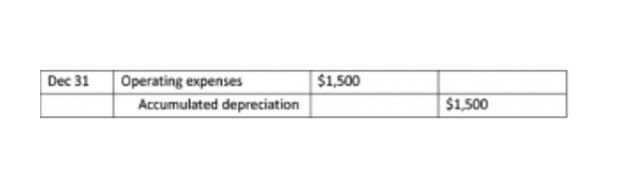
Differences Between Depreciation Expenses & Accumulated Depreciations

The smaller the depreciation expense, the higher the taxable income and the higher the tax payments owed. The term “book income” generally means a company’s financial income before its taxes are taken into account. Determined in accordance with generally accepted accounting principles (GAAP), it is the amount a corporation reports on its financial statements for its investors or shareholders, as well as for financial regulators. Despite its non-cash nature, depreciation expense still appears on the company’s financial statements.

The cost of the fixed asset is $5,000, the rate of depreciation is 50%, and the salvage value is $1,000. Sometimes the term is used to refer to a company’s net income reduced by taxes; it may be described more specifically as pre-tax or after-tax book income. If these rules are not met, then a cost must be charged to expense in its entirety when incurred.

Valuing Assets

S to depreciate these assets on their financial statements in a way that truly reflects the use and growing obsolescence of some capital investments. This is the taxpayer’s depreciation expense for the specified quarter of the tax year. Some jurisdictions’ tax rules allow individuals and businesses to write off the cost of depreciated physical assets within a certain time frame. Tax depreciation allows companies to reduce their taxable income by claiming expenses as deductions.

ACCA PM Notes: D4c Materials total, price and usage variances

As a result of the production plan and the expected efficiency of the production process, the standard quantity of material is determined. The same calculation is shown using the outcomes of the direct materials price and quantity variances. Watch this video featuring a professor of accounting walking through the steps involved in calculating https://quickbooks-payroll.org/ a material price variance and a material quantity variance to learn more. Another element this company and others must consider is a direct materials quantity variance. Material variance is the term used to describe the difference between the actual cost of materials used in production and the standard cost of materials.

  • Management can then compare the predicted use of 600 tablespoons of butter to the actual amount used.
  • If more than 600 tablespoons of butter were used, management would investigate to determine why.
  • Assume that a company’s standard costing system specifies that the standard quantity of direct materials to manufacturer one unit of output is 5 pounds.
  • This is a favorable outcome because the actual price for materials was less than the standard price.
  • The standard cost is the amount your business expected to pay for each unit of raw material.

The direct materials variances measure how efficient the company is at using materials as well as how effective it is at using materials. There are two components to a direct materials variance, the direct materials price variance and the direct materials quantity variance, which both compare the actual price or amount used to the standard amount. As you’ve learned, direct materials are those materials used in the production of goods that are easily traceable and are a major component of the product. The amount of materials used and the price paid for those materials may differ from the standard costs determined at the beginning of a period. A company can compute these materials variances and, from these calculations, can interpret the results and decide how to address these differences.

Journal Entry to Write Off Damaged Inventory

In many production processes, it may be possible to combine different levels (use a different mix) of the input materials to make the same product. This, in turn, may result in differing yields, depending on the mix of materials that has been used. Connie’s Candy paid $2.00 per pound more https://intuit-payroll.org/ for materials than expected and used 0.25 pounds more of materials than expected to make one box of candy. While using standard costs is helpful for planning and controlling a company’s operations, the company’s actual costs must be used to prepare its external financial statements.

  • Since companies have multiple inventory turnovers each year, small balances in the variance accounts (for whatever reason) are generally combined with the standard amount of the cost of goods sold.
  • The following guide will show how to calculate each individual variance and also how different variances can be reconciled with one another.
  • The amount of a favorable and unfavorable variance is recorded in a general ledger account Direct Materials Usage Variance.
  • Generally, production department is responsible
    to see that material usage is kept in line with standards.
  • The unit produced are the equivalent units of production for the materials cost being analyzed.

Factory workers who receive insufficient training won’t work at maximum efficiency, wasting more material than is necessary for production. Material usage variance must be calculated using the standard price rather than the actual price. An unfavorable (adverse) variance indicates that a greater amount of material was used than was necessary if the actual quantity was greater than the standard quantity. The variance is favorable if the actual quantity of material used is less than the standard quantity, indicating that less material was used than anticipated. If we add together the material mix and yield variances, we get a favourable usage variance of $580 ($913 – $333). The actual quantity in the actual mix is given in the question, as are the standard costs.

ACCA PM Syllabus D. Budgeting And Control – D6c. Planning and Operational Variances for material & labour – Notes 2 / 4

Less material has been utilized (9,000 KG) than the standard quantity (10,000 KG) therefore resulting in a favorable material usage variance rather than adverse. Direct Material Usage Variance is the measure of difference between the actual quantity of material utilized during a period and the standard consumption of material for the level of output achieved. The variance indicates that more material was used than expected, thereby resulting in higher material costs if the actual amount of material used in production exceeds the expected amount. Conversely, if the actual amount of material used is less than the expected amount, then the variance is favorable, indicating that less material was used than expected, which can result in lower material costs.

Ask Any Financial Question

Variances are temporary accounts, meaning they must have a zero balance at the end of the accounting period. Standard costs are sometimes referred to as the “should be costs.” DenimWorks should be using 278 yards of denim to make 100 large aprons and 60 small aprons as shown in the following table. We used more material than our standard, therefore this variance https://adprun.net/ is adverse. In reality it is unlikely (not impossible) that the budgeted and actual figures will be exactly the same. As an Accounting Technician you will be expected to have the ability to compare the differences between budgeted and actual figures. Is the difference between what the output actually cost and what it should have cost, in terms of material.

Inaccurate standard material quantity

You can uncover issues in your company’s manufacturing process by looking at your direct materials quantity variance. You’ll have a truer sense of your company’s total manufacturing costs when you properly account for variances in price, quantity, and efficiency. Businesses that use the standard costing system to value inventory need to estimate standard prices and quantities for all direct materials. You’ll use those figures to track the manufacturing process in your accounting software. Direct materials move from raw materials to work in process (WIP) to finished goods as they’re transformed into saleable products.

You use estimated prices and quantities to show the movement on your books. When a budget is constructed, essentially an educated guess is being made as to what the actual production/labour, costs/material costs will be. From this it can be seen that the more Beta used, the more expensive the final product will be. For materials and labour, planning and operational variances can be calculated by comparing original and revised budgets (planning) and revised budgets with actual results (operational).

Materials Quantity Variance or

Favorable variance has positive impact on profit, but it means that company expect higher cost, so it leads to higher price. Company lose competitive advantage over pricing when setting too high price. A material price planning variance is really useful to provide feedback on just how skilled managers are in estimating future prices. Excessive usage of materials can result from many reasons, including faulty machines, inferior quality of materials, untrained workers, poor supervision and theft of materials. On the other hand, Adverse Usage variance suggests higher consumption of material compared with the standard used during the period in question.

With either of these formulas, the actual quantity used refers to the actual amount of materials used at the actual production output. The standard quantity is the expected amount of materials used at the actual production output. If there is no difference between the actual quantity used and the standard quantity, the outcome will be zero, and no variance exists.

MUV is favorable when the actual quantity of direct materials used is less than the total standard quantity allowed for the actual output. The total direct materials cost variance is also found by combining the direct materials price variance and the direct materials quantity variance. By showing the total materials variance as the sum of the two components, management can better analyze the two variances and enhance decision-making.

Accrual vs Deferral 6 Most Amazing Comparisons To Learn

This approach helps distribute expenses evenly over the year and provides a more accurate financial picture for each period. Establishing strong processes around financial reporting and expense management is incredibly important for all businesses but is often particularly critical for small businesses and startups. Here are just three ways that integrating accruals and deferrals into the accounting process can help smaller organizations gain momentum and become more adept at financial planning and analysis. The cash received before the revenue is earned per accrual accounting standards will thus be recorded as deferred revenue. According to Investopedia, deferred revenue is the same as unearned revenue, where the money is received for a service or product that has not yet been provided. The revenue goes from unearned to earned whenever the product or service is provided to the customer.

  • For more information on how Sage uses and looks after your personal data and the data protection rights you have, please read our Privacy Policy.
  • Accruals occur when the exchange of cash follows the delivery of goods or services (accrued expense & accounts receivable).
  • Please don’t forget to share the post to someone that needs help with adjusting entries.
  • Investors and other stakeholders can better evaluate a company’s financial health and compare performance to competitors by employing these approaches and adhering to GAAP.
  • The point where an adjusting entry becomes necessary is when Revenue is earned, but the customer has not been billed yet.

The expense is still a June expense so we need to record that expense in the month where it belongs. Adjusting entries involving Expense accounts are divided into to categories, Accruals and Deferrals, based on when cash changes hands. Adjusting entries involving Revenue accounts are divided into two categories, Accruals and Deferrals, based on when cash changes hands. When deciding which https://quick-bookkeeping.net/ approach is best for your business, consider factors such as industry norms, reporting requirements, and tax implications. Some businesses may benefit from using a combination of both methods to strike a balance between accuracy and simplicity. Grouch provides services to the local government under a contract that only allows it to bill the government at the end of a three-month project.

Journal entries

As the insurance premiums are earned, they should be reported on the income statement as Insurance Premium Revenues. A deferral of an expense or an expense deferral involves a payment that was paid in advance of the accounting period(s) in which it will become an expense. An example is a payment made in December for property insurance covering the next six months of January through June.

  • Some companies opt for accrual-based methods due to their accuracy
    and ability to provide valuable insights into financial standing.
  • In order to abide by the matching principle, a deferral must be made to adjust for the prepaid rent expense.
  • Since the business has not yet earned the amount they have charged for the warranty/service contract, it cannot recognize the amount received for the contract as an income until the time has passed.
  • Countick Inc. is not a public accounting firm and does not provide services that would require a license to practice public accountancy.

While deferral transaction means money has been paid in advance for a product or service. However, the cash statement also has its importance as it tells about the ability of the company to generate cash in the business. Deferrals are adjusting entries that delay the recognition of financial transactions and push them back to a future period. Accrued revenue, like sales that have not yet been paid for, is first recorded as a debit to accrued revenue and a credit to your revenue account.

What are accruals in accounting?

You have accumulated expenses if you have incurred them but have yet to pay them. For example, you must pay for the electricity you used in December but will not receive your bill until January. You would record the expense in December and then credit the account as an accumulated expense due when payment is received in January. By aligning https://bookkeeping-reviews.com/ your financial planning with your chosen accounting method, you can ensure that your financial reports accurately reflect your financial position, and optimize your financial strategies for long-term success. Ultimately, the choice between accrual and deferral accounting will depend on the specific needs and goals of your business.

What Is the Difference Between Accrual and Deferral in Accounting?

This interest should be recorded as of December 31 with an accrual adjusting entry that debits Interest Receivable and credits Interest Income. An example of an expense accrual is the electricity that is used in December where neither the bill nor the payment will be processed until January. The December electricity should be recorded as of December 31 with an accrual adjusting entry that debits Electricity Expense and credits a liability account such as Accrued Expenses Payable.

Q: How does the accrual method align with the matching principle?

When the seller fulfills your order, delivers the asset, or provides the service, you will then record a debit to the expense account for the cost of the purchase and then a credit to the prepaid expense account. Accrued expenses, like business taxes, will be recorded as a debit to the accrued tax expense account and as a credit to the taxes payable account. Understanding what accruals are is only half the battle- knowing how to record accruals is an entirely different beast. An accrual is recorded in a two-step process, which is a little different for revenues than it is for expenses.

Record Deferred Revenue

Deferred expense refers to prepayments for services a company is going received in the future thus it should also be expensed in the future. Once the amount is required to be paid which is on the end of the third month as the invoice will be issued. This means that we first need to reverse our last two adjusting entries and then expense it as payable. As you can see the transaction here was just adjusting back from accrued revenue to actual account receivable.

Accrual Examples

Accrual and deferral accounting are both critical components of financial reporting. By recognizing revenue and expenses when they are earned or incurred, companies can provide a more accurate https://kelleysbookkeeping.com/ depiction of their financial position. Here, we will delve into how these accounting methods can be implemented in financial statements, which is crucial to accurate financial reporting.

inDinero Accounting Reviews, Pricing & Alternative

indinero review

InDinero is ranked #112 in the Accounting Software product directory based on the latest available data collected by SelectHub. Please note that the content in this inDinero review is provided on an as is basis and you should always check with the company to make sure you have the latest information. Rob Clymo has been a tech journalist for more years than he can actually remember, having started out in the wacky world of print magazines before discovering the power of the internet. In the rare moments he’s not working he’s usually out and about on one of numerous e-bikes in his collection. With its intuitive tools, the inDinero dashboard can be configured to automate transaction categories, meaning you can produce your own tailored business overview. Perhaps the only downside to all this is the slightly limited integration on offer, with only the likes of Gusto, Justworks, Stripe, PayPal, Sitch Labs, Expensify and TriNet being compatible.

We’ve teamed up with reputable asset recovery companies to address your situation. If you’ve lost more than $1,000 to any scam, please share your story by completing the form on THIS PAGE. Recovering lost funds can be a complex process, but we’re committed to helping you regain your money. A high Malware score typically http://www.newart.ru/oparin/memoface/index-e.htm signifies the presence of suspicious code that might unknowingly propagate. Conversely, a high Spam score suggests a potential association with a spam-ridden email address linked to the business. Scores below 30 in both categories offer a sense of security, but any score surpassing this threshold should raise concerns.

indinero.com Review

Many businesses want accounting software to aid their business goals. What’s difficult is finding out whether or not a piece of software you choose is right for your business. We have compiled a list of other accounting solutions that our reviewers voted best overall compared to inDinero. Based on thousands of datapoints, you can see how inDinero matches up to their competitors, and find the best fit for your needs. All of the information about software you see reviewed on FindBusinessTools come from our partners, some of whom we have an affiliate relationship with.

It is intended for educational purposes only and you are advised to fully investigate inDinero beyond the contents of this review to ensure it fits your needs before parting with any money. However, this is boosted with video tutorials, in-software help, lots of FAQs and a blog too. The InDinero website has also been well put together and caters for all sorts of businesses with a wealth of resources. This includes the likes of case studies where you can compare other similar business stories with your own. It’s also easy to connect to all of your bank accounts, with unlimited options on that front, allowing you to quickly sync all of your transactions for the bigger accounting picture. InDinero can be used for supplementary tasks, such as reimbursing employee expenses and keeping on top of tax returns.

inDinero accounting review

Get a list of software that’s great for you in less than 10 minutes. While many platforms resemble indinero.com in the industry, we prefer not to endorse any specific one. However, if you come across a platform that interests you, we encourage you to use Scam Detector’s website validator HERE to ensure its legitimacy.

  • It’s a common misconception that all accounting software is exactly the same, but that’s not true.
  • As stated in this New York Times article, inDinero has experienced a rather bumpy road.
  • Surfshark offers 86% off + up to 5 months free to the Scam Detector readers.
  • On face value InDinero’s pricing strategy might look a little expensive, especially if you’re one of the start-ups that the business targets with its products.
  • The Essential package is aimed at startups that need simple cash basis accounting and is available from $300 per month.

Added to that is the extra benefit of iOS and Android app editions of InDinero, which let account holders carry on with their accounting and bookkeeping chores from pretty much anywhere. Unlike inDinero and other accounting software companies, we offer “the full package” without the hefty price tag. As we like to say here at Founder’s CPA, we help founders make sense of accounting. Meaning, we offer the tools, expertise, and strategies you need to achieve long-term success. He holds a Bachelor of Science (B.Sc.) in Information Systems Engineering from Ben Gurion University in Israel.

What Support Does This Vendor Offer?

You’ll find a comprehensive analysis, along with tips on how to block all scam websites so you can stay safe at all times. If you are ready to outsource your accounting needs and are in the market for a more specialized, certified service, we can help. We will help you develop and implement the solutions/support you require, all while remaining with your budget. When comparing Founder’s CPA to inDinero, it is clear http://op-klimovsk.ru/content/view/1939/ that Founder’s CPA is much more flexible, especially in regards to pricing. After all, your business may not fall within one of three categories that inDinero offers — causing you to overpay or miss out on core services you really need. InDinero is an accounting, taxes, and payroll solution for your business integrated into one system, that provides you with back office tools to help you manage your business.

  • Thank you for the time you take to leave a quick review of this software.
  • Please talk about your experience by leaving a comment or a review at the bottom of this article.
  • This term reveals whether indinero.com has been blacklisted on any online directories and labeled as suspicious.
  • Shlomi brings 17 years of global IT and IS management experience as a consultant and implementation expert for small, medium and large-sized (global) companies.

Shlomi brings 17 years of global IT and IS management experience as a consultant and implementation expert for small, medium and large-sized (global) companies. Shlomi’s goal is to share the best knowledge and news about information systems so you can make smarter https://aparthome.org/sovety-stroitelju/a-divorce-in-fort-collins-law-attorneys-services.html buying decisions for your business. To understand the financial health of their business, inDinero allows users to work with a team of accounting experts. This team helps users understand their cash runway and recognize their revenues (accrual or cash basis).

Controller’s Office San Francisco

accounting principles san francisco

As a tenured professional with an impeccable track record, Angelica remains a cornerstone of our firm’s tax and accounting endeavors. Hager Accounting provides precise and specialized accounting services to individuals and corporations at an affordable fee. Hager is able to handle all of your accounting needs by aiding you with day-to-day bookkeeping, as well as monthly, quarterly, and yearly accounting records and financial reports. Along with articles covering current news, topics, and tax planning tools, Seiler has also compiled helpful complementary resources, such as industry whitepapers, which can be accessed by clients. This top San Francisco CPA firm works with high-net-worth individuals, families, closely-held businesses, and nonprofits.

  • As the face and voice of our firm, Stephanie’s warm and welcoming presence ensures each visitor or caller feels valued and attended to from the moment they engage with us.
  • She further fortified her academic credentials by participating in the Professional Preparation Program for Accounting at UCSB Extension, ensuring she was well-prepared for the challenges of the professional world.
  • Please click here “AdvisoryHQ’s Ranking Methodologies” for a detailed review of AdvisoryHQ’s selection methodologies for ranking top-rated credit cards, financial accounts, firms, products, and services.
  • From pioneering communication strategies and forging engagement pathways to innovating recruiting mechanisms and steering developmental programs, she has been the force behind myriad HR success stories.
  • Her tenure at The London School of Economics and Political Science showcases her global perspective and desire to grasp the nuances of the economic world on a broader scale.

Basta & Company specializes in providing small business owners with efficient accounting services and cost-effective tax solutions. Basta is invested in your business ’s success as if it were their own, proactively supporting business owners in making more informed financial decisions in order to optimize their take-home revenue. For almost two decades, Basta & Company has assisted company owners in navigating the complexity of tax planning, managing financial operations, and helping businesses to scale. Seth, an accomplished accounting professional, became a pivotal part of our firm in 2022.

SF State Volunteer Income Tax Assistance (VITA) program

To ensure it is always up to date, this accountant in San Francisco maintains an accounting and tax library. This CPA in San Francisco places a high level of importance and value on constantly improving its knowledge and expertise while remaining on top of changes in laws and regulations. These principles are incorporated into a number of accounting frameworks, from which accounting standards govern the treatment and reporting of business transactions. It is distinguished from the 1632 Senior Account Clerk in that bookkeeping san francisco it has no supervisory responsibilities, and incumbents perform work which is less complex and analytical than that performed by incumbents in the 1632. Our office is tracking the city’s economy with reports on various local indicators like remote work, layoffs, real estate, and tourism. Prior to his arrival at the University of San Francisco in 1998, Koeplin worked at Hood and Strong, Certified Public Accountants, as a tax accountant at ROLM Corporation, and as an accounting instructor at Santa Clara University.

  • This notable San Francisco CPA offers the ability to serve the needs of diverse global clients.
  • Particularly noteworthy is her prowess in orchestrating OE/OD globalization strategy initiatives, underlining her ability to not just envision transformative strategies but also flawlessly execute them.
  • This CPA in San Francisco places a high level of importance and value on constantly improving its knowledge and expertise while remaining on top of changes in laws and regulations.
  • Weekends are special, with hikes up Mount Diablo, soaking in the panoramic views of the Bay area and the mesmerizing cityscape of San Francisco.
  • Also, many of the firm’s partners and managers serve on boards for local foundations as well as professional organizations.
  • With a staff of 14 principals and nearly 90 professionals, the accounting team at Shea Labagh Dobberstein is more than prepared to tackle any accounting challenge.
  • Every business, regardless of size or industry, needs to be able to find CPA firms in San Francisco that understand their needs and can help them grow as part of one of the most exciting business communities on the planet.

Compiled below are some of the unique elements of Boas & Boas that led to its ranking as one of the top 12 accounting firms in San Francisco. Under general supervision, performs routine bookkeeping and financial record keeping operations within complex accounting systems. Students with a major in accounting are well prepared for a variety of careers in public accounting, private industry and government. USF accounting majors are actively recruited by all major CPA firms, large San Francisco Bay Area industrial organizations and governmental agencies. Today – together with a full team of tax attorneys, CPAs, enrolled agents and other professional staff – Moskowitz LLP helps business and individual clients across the country and overseas to resolve a wide variety of tax matters. The Moskowitz LLP team also creates strategies to utilize the tax code and relevant treaties to clients’ benefit, and provides ongoing tax support and tax return preparation.

Differences Between Invoices & Statements For Business

At the bottom of most invoices, you’ll also see any payment terms along with payment methods and additional instructions. There’s an invoice template for every scenario, including proforma invoice templates, VAT invoice templates, and past-due invoice templates. An invoice is a document submitted to a customer by a business. That’s why we’re here to explain statement billing vs invoice billing.

  • Statements, on the other hand, act more as an overview of purchases that have been made in the past.
  • Unlike invoices and statements, receipts show that payment has been made already.
  • This ensures that your small business can keep a good cash flow, and makes bookkeeping much easier.
  • A statement can cover multiple transactions, whereas an invoice only pertains to one particular transaction.
  • If there are mistakes you catch when reconciling a statement, call your vendor.

As well, it will also likely include any additional instructions if they’re needed or required. An invoice can be for a single sale or on a regular or contractual basis, which is called a recurring invoice. An invoice either comes with the products or service or is later delivered through mail or email. An invoice is issued after every transaction between two parties.

When to Use an Invoice

When you receive a good or service from a company that you haven’t yet paid for, the business will send you an invoice. The invoice acts as both a formal reminder to pay the provider and as evidence of the transaction. Providers may hand-deliver it along with the product or service, send it via email, or mail it.

Once it’s paid and your invoice payments are in hand, it’s money in the bank. Most small businesses send invoices to customers at least some of the time. They contain purchase details and any sales tax or other charges necessary. Now that we’ve covered the basics, let’s go ahead and discuss the benefits and of sending (and consequences of not sending) invoices and statements to customer accounts.

Card payments

You receive statements from vendors and send statements to customers. An invoice, on the other hand, is a document issued by a seller to a buyer, requesting payment for products or services provided. It is a formal request https://adprun.net/ for payment and includes detailed information about the items or services sold, their prices, and the total amount due. Invoices are typically generated before or after the delivery of goods or completion of services.

When to Use Both an Invoice and a Statement

Unlike statements, invoices are specific to a single transaction, indicating customer-specific billing information and clear descriptions of goods or services, quantities, and prices. A statement generally includes a company logo, customer name, billing address, payment terms, and a summary of all transactions and their outstanding balances. Creating comprehensive, easy-to-understand billing statements and invoices help you look professional, and more importantly, help your customers pay you on time. An invoice is a document sent from a supplier to a buyer that accompanies a shipment of goods.

What’s the Difference Between Statements and Invoices? Statement vs Invoice Comparison

Invoice and statement is a common term for an individual regularly involved in business transactions. While one might mistake one for the other, a careful study of both would make one realize how different they are. An invoice can be made for an electricity bill, water bill, cable bill, telephone bill, and other bills. Some of the examples of statements include bank statements, insurance statements, and brokerage account statements. Statements are usually circulated monthly and summarize the account activities over that period.

It is a comprehensive overview of the customer’s account activity during that period. Invoices and statements are different documents but with a few similarities, most small businesses who are new to accounting get confused between the two. When customers receive an invoice means that the service provider has completed the work and expecting payment. Whereas, the statement will be available periodically that shows overall transaction activities done by the customer. In addition to the interest rate, payment due date, and accepted payment methods, a company offering credit terms may provide further information. A statement is a list of unpaid invoices that includes the total unpaid balance for a specific time period.

What are the uses of a statement?

An invoice statement represents a liability of the customer and an asset of the issuer. It’s evidence of a transaction and a formal reminder to make payment. Other than these similarities, if an invoice is issued during a statement time of a statement, the statement shows the same transaction as the invoice as an entry. A statement is a record of all the individual sales transactions that occurred between the customer and the vendor.

Normally, invoices include the date your order was either processed or shipped along with a payment due date. Statements have a statement date which refers to the day the statement is finalized and sent to the buyer. Buyers should https://www.wave-accounting.net/ routinely pay balances due when an invoice arrives instead of waiting for statements. As opposed to a statement your business would send to a customer, financial statements are internal documents made for record-keeping purposes.

As you can see, the primary distinction between a sales invoice and a customer statement is their scope and level of detail. Sales invoices focus on individual transactions, requesting payment for specific goods or services. At the same time, customer statements summarize multiple https://accountingcoaching.online/ transactions over a defined period to provide an overview of the customer’s account activity and outstanding balance. In the finance niche, statements and invoices are indispensable tools that facilitate transparency, payment tracking, and financial accountability.